
Category: aktualności- strona główna
Aktualności
Tomorrow’s Logistics in Practice: Students Discover Bioagra’s Secrets
Thirty-one students from Nysa’s “Ekonomik” secondary school took part in a unique vocational learning session. Class III L swapped their traditional classroom for an exploration of the bustling “Goświnowice” Ethanol Production Plant. The visit demonstrated that modern logistics is far more than just transport and warehousing—it is a finely tuned organism driven by technology.
For the Class III L students studying to become logistics technicians, the visit to the Bioagra plant was an opportunity to measure textbook theory against the rigorous demands of real-world industry.
A “Living Organism” and Artificial Intelligence
Bioagra employees managing logistics operations guided the students and their teachers through the entire production cycle. The tour covered everything from raw material intake (corn grain) and the milling process to the advanced logistics required for shipping out finished products.
What surprised both the students and teaching staff most was the plant’s high level of automation, as well as the implementation of artificial intelligence in select processes. Despite the massive scale of operations, company personnel focus on overall system management rather than manual tasks.


Logistics Beyond the Textbook
Edyta Wiencek, homeroom teacher for Class III L and a logistician by training, expressed enthusiastic praise for the opportunity to show students behind-the-scenes operations that are usually off-limits to the public. She noted how much today’s market requires shifting away from traditional views of transport toward AI-supported, integrated ecosystems.
“We cover many of these aspects in theory, but students naturally rarely get to experience them firsthand at school,” says Edyta Wiencek. “During this study visit to Bioagra, we were able to see the inner workings of a modern industrial enterprise in practice. Adults and students alike were thoroughly impressed by the sheer scale of the production and logistics operations carried out here every day.”
The teacher also emphasized the growing importance of “eco-logistics” and the integration of new technologies into logistics workflows. This serves as a clear indicator for students on where to focus their future educational path, she noted.
Bridging Education and Business
The visit to Bioagra is part of a broader project titled “Support for the Development of Modern Vocational Education, Higher Education, and Lifelong Learning,” funded through the National Recovery Plan (KPO). Agnieszka Wajdzik, representing the District Labor Office (PUP) in Nysa, highlighted the vital role such initiatives play in shaping well-prepared professionals.
“I am impressed by how well organized and interconnected such a large facility is,” says Agnieszka Wajdzik. “Dozens of external truck drivers enter the grounds daily. Yet, thanks to effective organization, automation, and systemic logistics, everyone knows exactly where to go and what to do.”
Wajdzik added that the project aims to support students by offering real-world exposure to modern enterprises. As demonstrated by the Bioagra visit, enthusiasm is high, with schools already showing strong interest in booking future study visits. The District Labor Office in Nysa emphasizes that educators view the program as a genuine opportunity to better prepare young people for the demands of today’s job market.
Inne aktualności










AKTUALNOŚCI | 24.12.2018
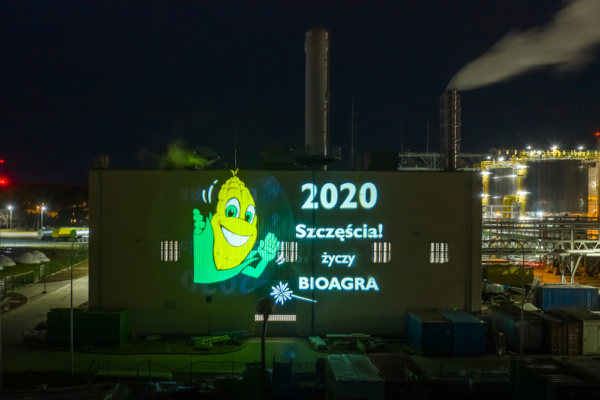
10 story Mr. Corn
Bioagra has launched probably the largest Christmas illumination in the region.


Aktualności
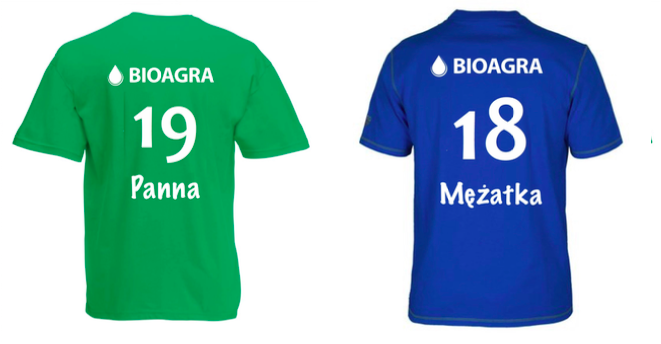
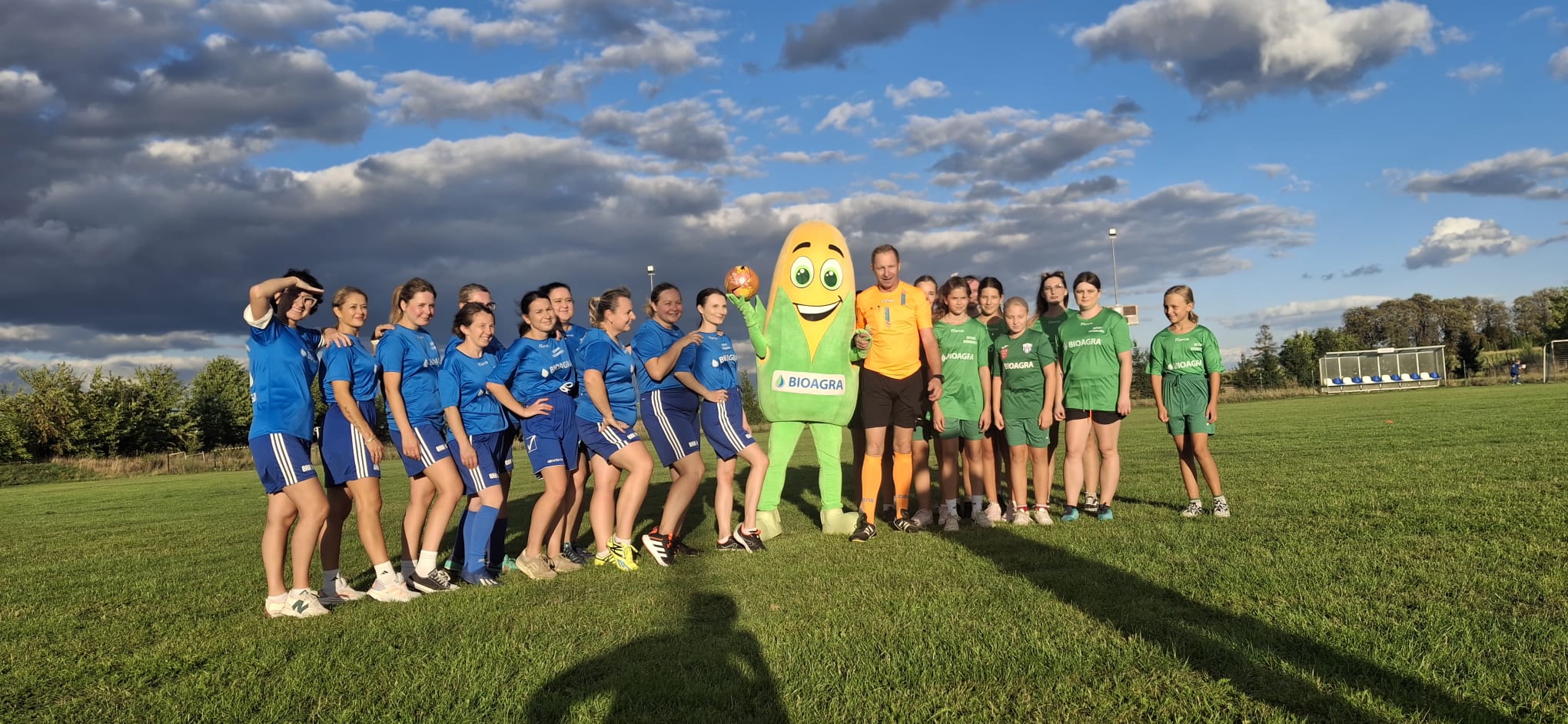
Married Women Prevail in Goświnowice! “Single vs. Married Women” Match Electrifies Residents Once Again
Last weekend, Goświnowice once again became the arena for a unique sports and community-building event. As part of the annual village harvest festival, a women’s soccer match – “Single vs. Married Women”- was played.
This time, the Married Women got to celebrate a 3:1 victory, upholding one of the most charming traditions in the municipality of Nysa.
On-Field Excitement and a Village Celebration
This year’s clash was scheduled as one of the key highlights of the Goświnowice 2026 Harvest Festival. Before the women took to the pitch, residents and guests took part in a Holy Mass, a harvest procession to the stadium, and artistic performances. The results of a culinary competition for the best pumpkin or corn dish were also announced.
The match provided plenty of excitement and humor, and after the final whistle, it was the Married Women who left the field in high spirits following their 3:1 win. The entire day—packed with attractions ranging from free inflatable bounce houses and LKS Goświnowice games to a raffle supporting the local parish—culminated in an evening dance party.
A Tradition Stronger Than Interruptions
The “Single vs. Married Women” showdown has become a tradition of sorts in Goświnowice. The first match of this kind took place in September 2017.
Although the continuity of the event was temporarily interrupted by the pandemic, residents quickly returned to cultivating this tradition, proving just how important this unique match is on the harvest festival calendar.
Local Integration
Today, the match between single and married women in Goświnowice is much more than a sports rivalry. Above all, it is a fascinating symbol of integration that bridges generations and engages the entire local community.
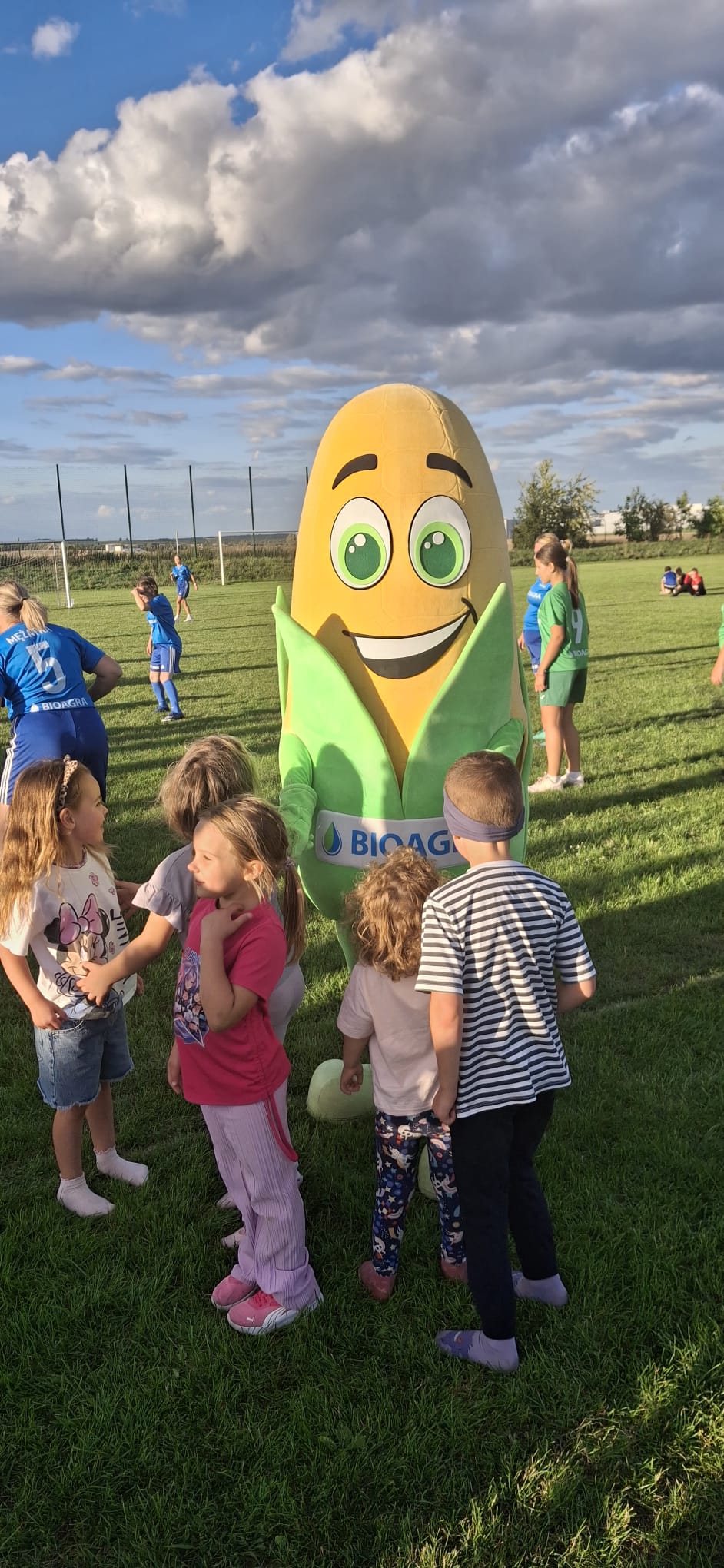
Village authorities, the Country Housewives’ Association, and local businesses all contribute to organizing the event. An important role is played by Bioagra, a long-standing partner and sponsor of the match. The company also regularly supports the organization of the harvest festival in Goświnowice, where many of its employees come from.
Inne aktualności
AKTUALNOŚCI | 24.12.2018
10 story Mr. Corn
Bioagra has launched probably the largest Christmas illumination in the region.
Aktualności
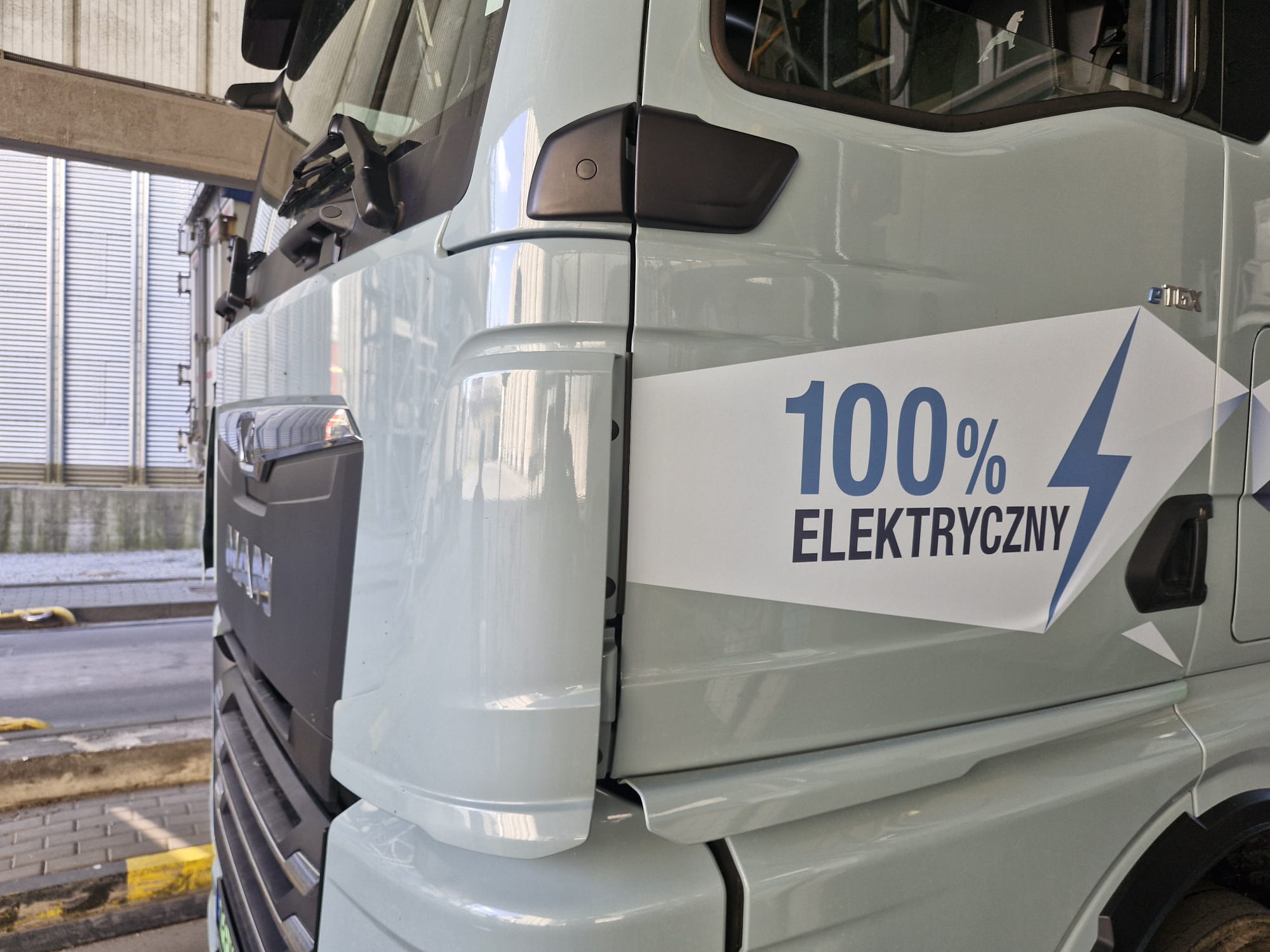
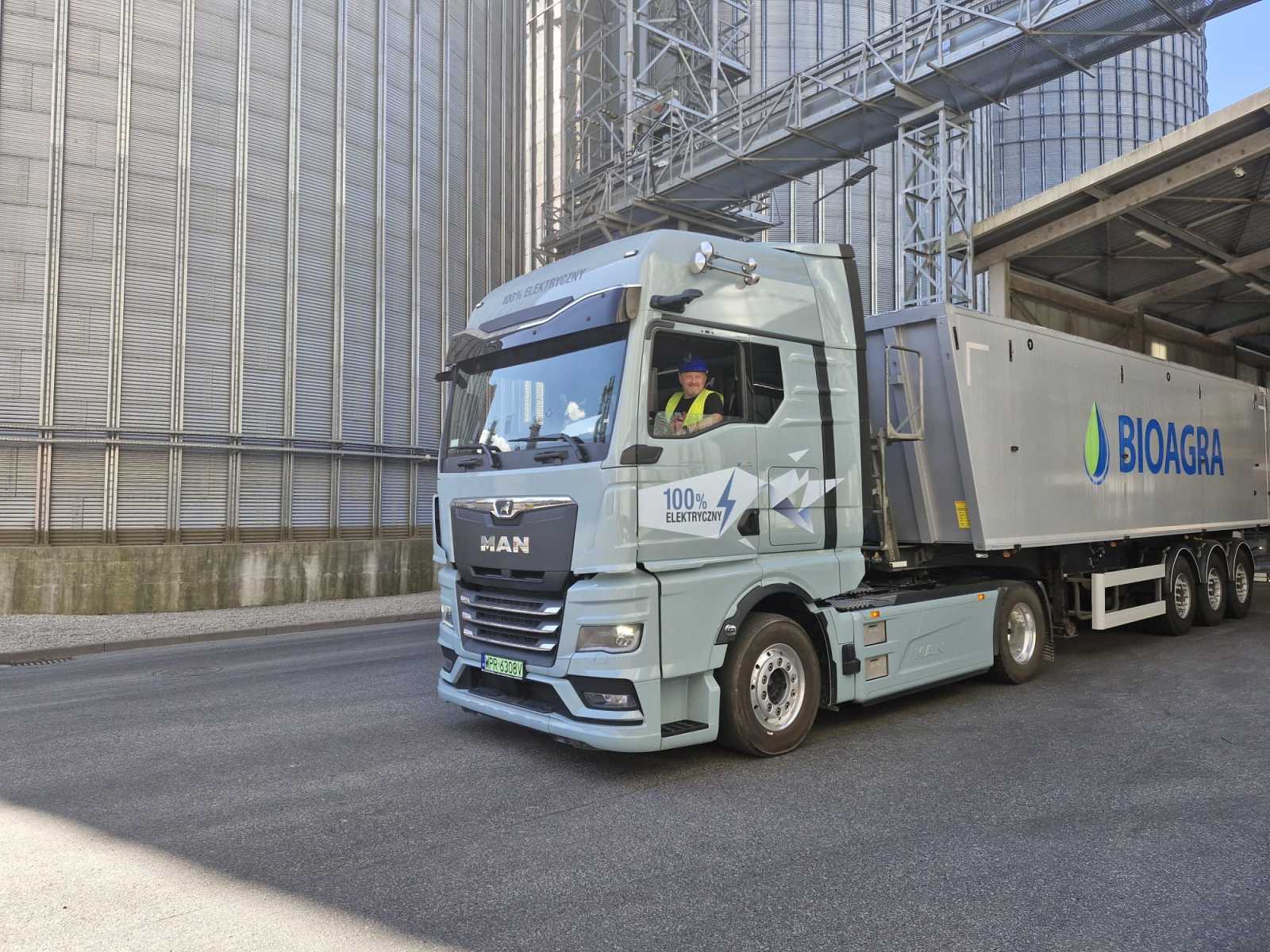
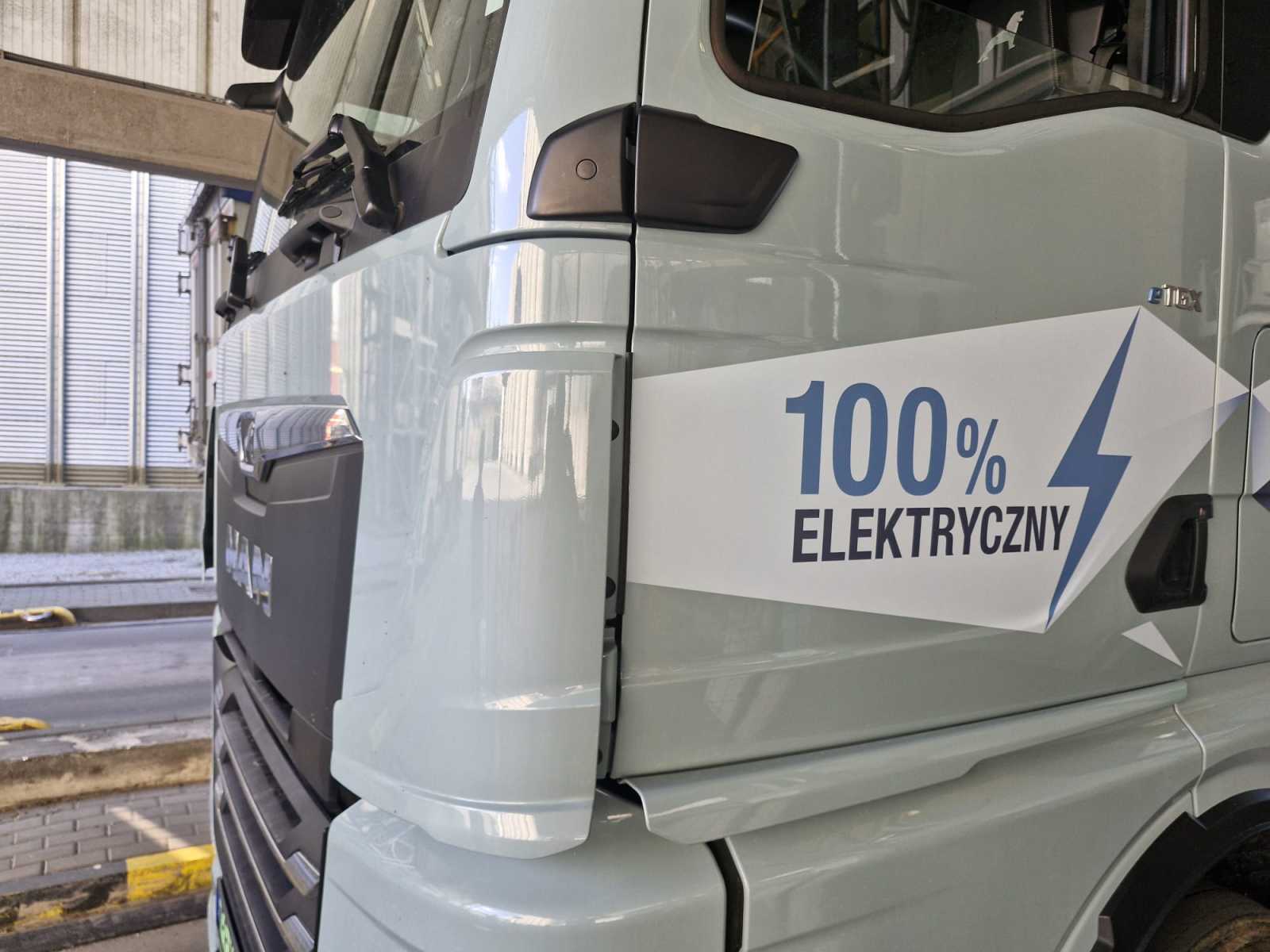
Bioagra Tests Its First Electric Truck
The Ethanol Production Plant has tested an electric semi-truck in Nysa. Performance, quiet operation, and potential cost savings are the defining features of this vehicle.
The company evaluated how the modern truck handles the real-world road conditions of Nysa County and how its operating costs compare to a traditional diesel engine.
Electric Power Delivers
One of the most surprising observations was the vehicle’s dynamic performance. The driver conducting the tests for Bioagra clearly highlighted that the truck has a substantial power reserve.
That extra power comes in handy on the rolling, hilly terrain of the region. The vehicle climbs hills with great ease, even when fully loaded. The test driver admitted that the truck doesn’t feel like it is straining at all on steep inclines.
4 Gears and Digital Screens
The interior of the electric truck represents a true revolution in driver ergonomics, explains Tomasz Pohl, Logistics Manager supervising the test.
“The most immediately noticeable change is the complete replacement of traditional side mirrors with a camera system,” says Pohl. “The feed is displayed on special screens mounted inside the cab. This setup challenges old habits and aligns with the modern character of the vehicle.”
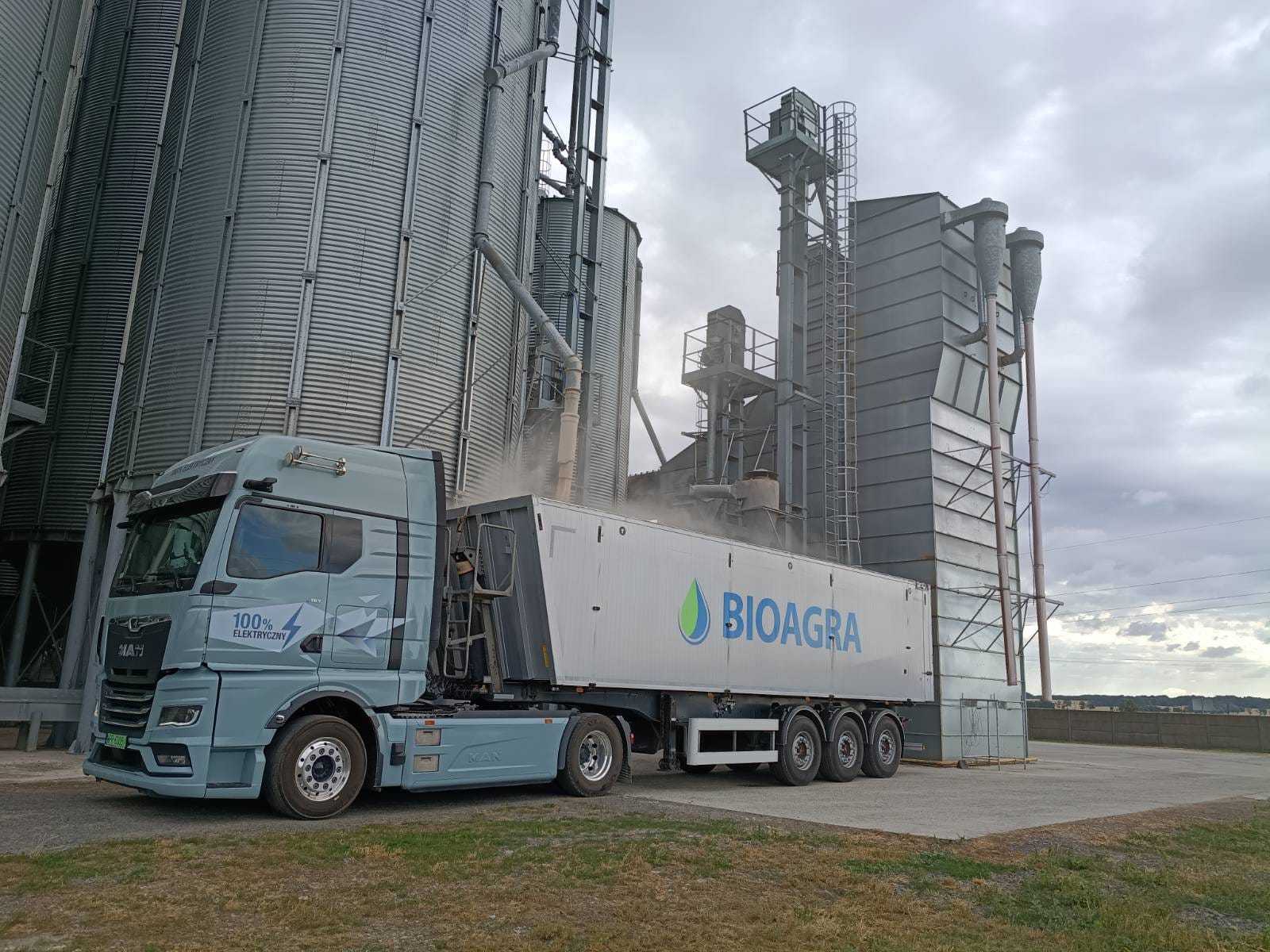
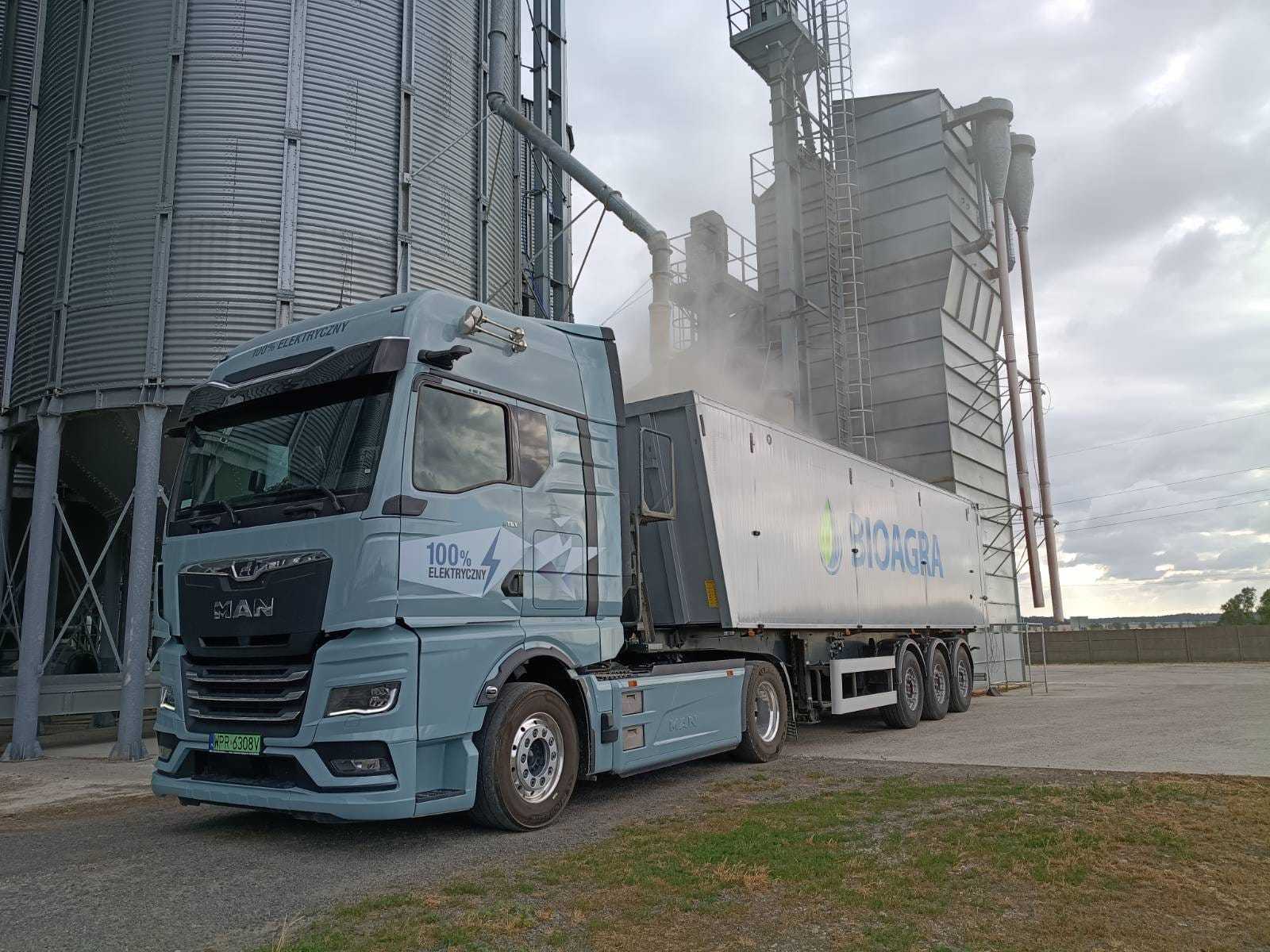
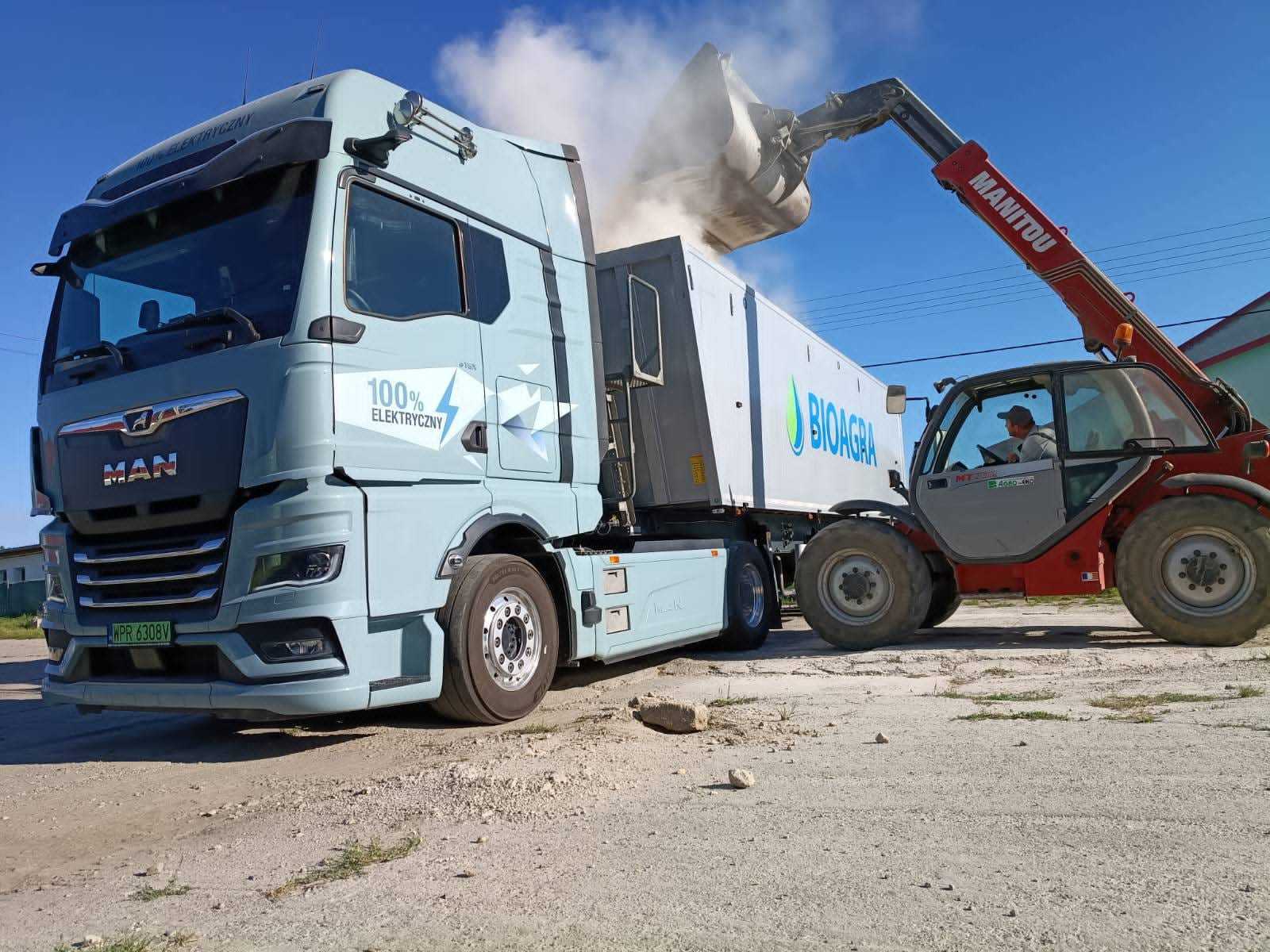
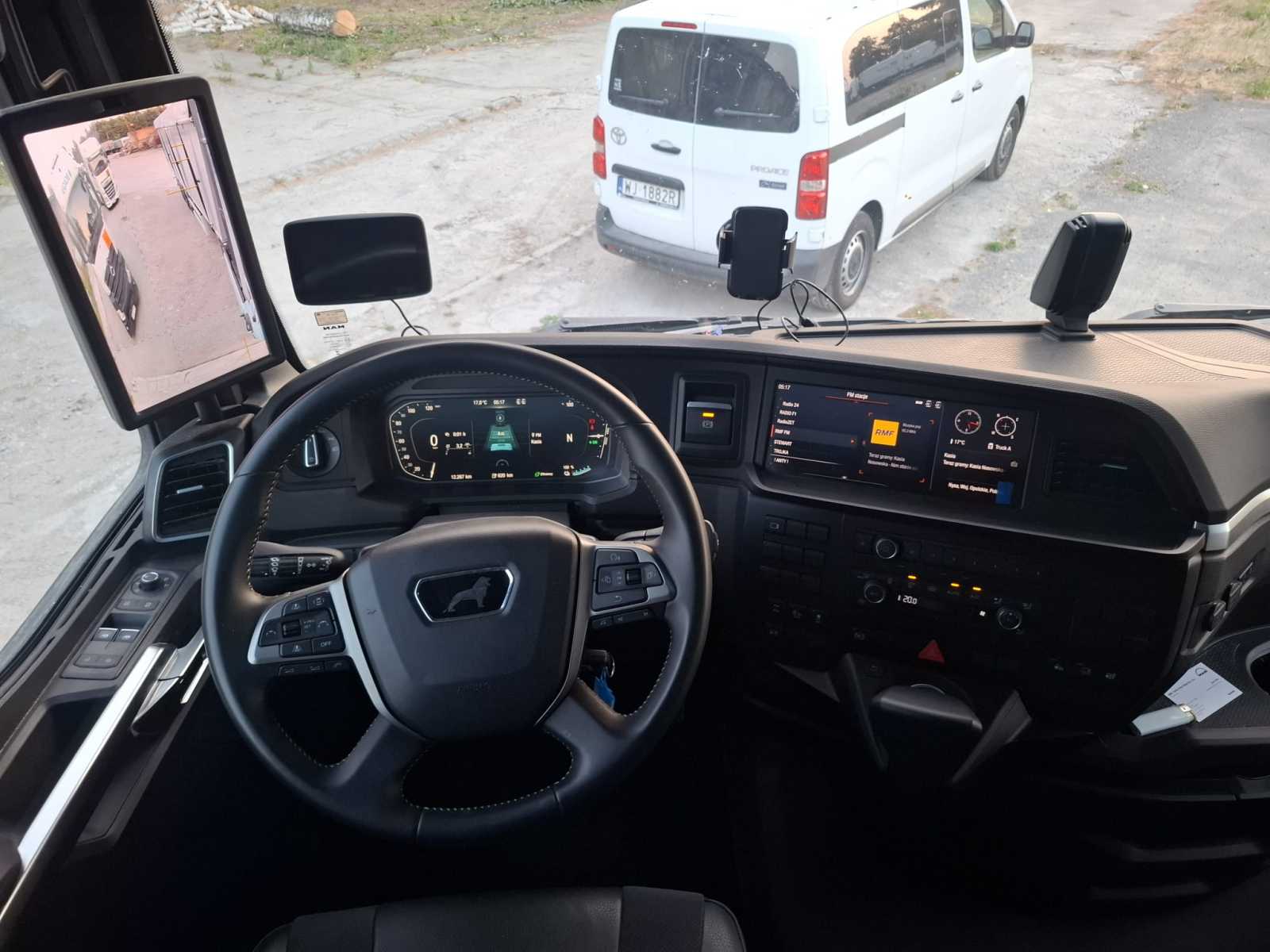
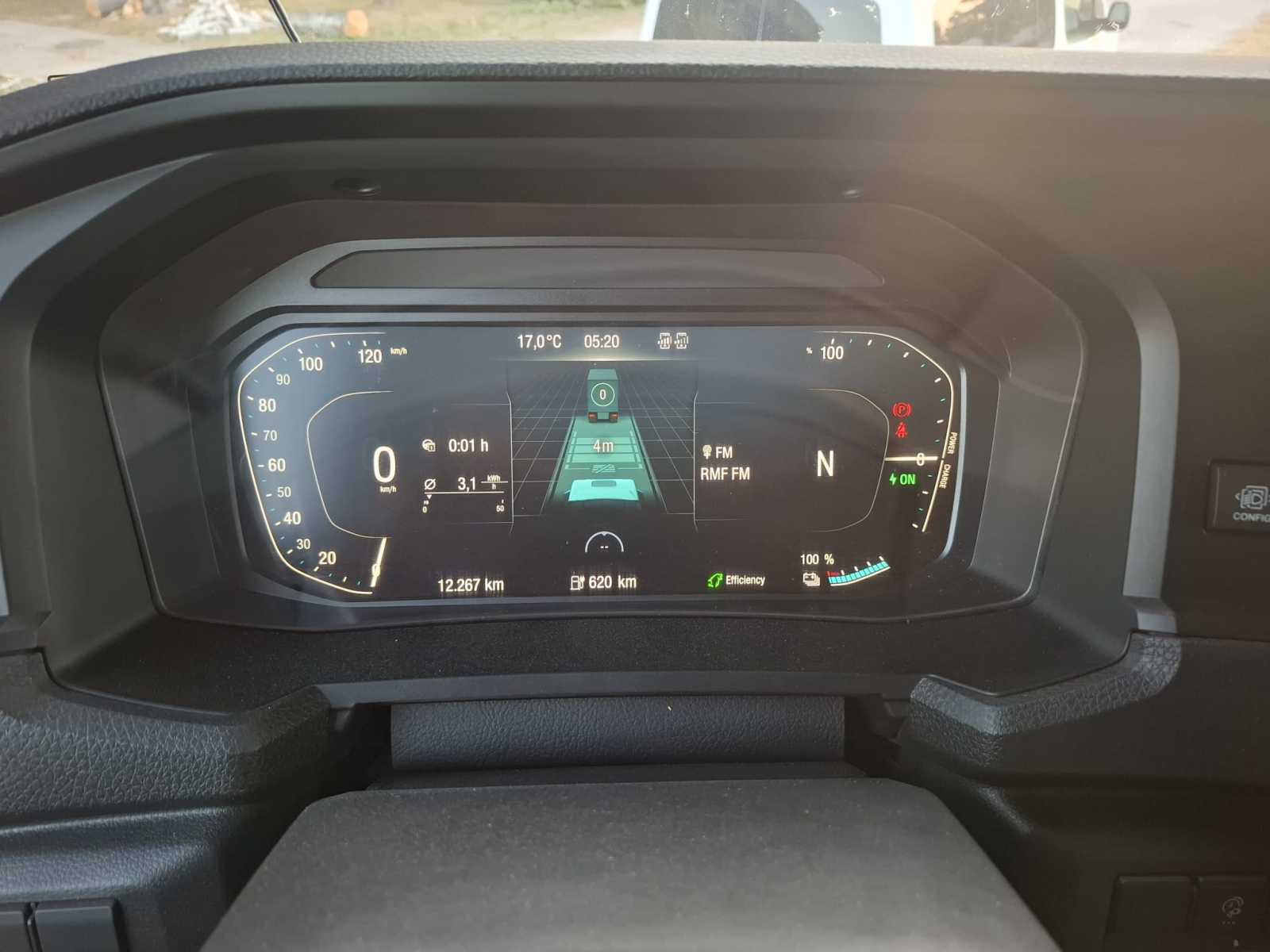
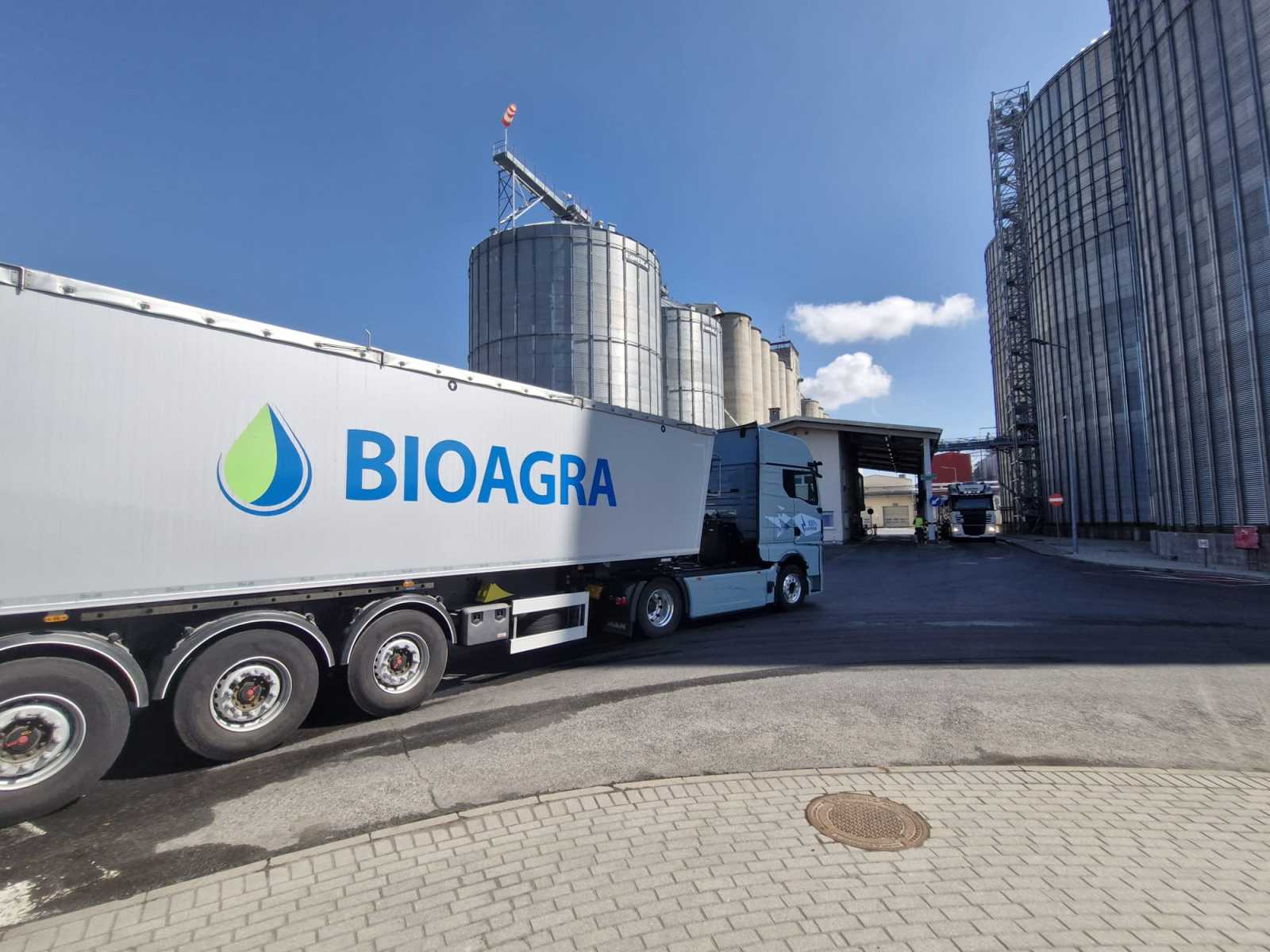
Another technological highlight is the powertrain. While traditional combustion trucks require complex transmissions—typically with 12 to 16 gears (though 18-speed versions also exist)—their electric counterpart performs flawlessly using just 4 gears.
Rounding out the experience is the absence of engine noise typically associated with heavy trucks. Inside the cab of the electric tractor unit, it is quiet, which helps reduce driver fatigue.
The Magic of Regeneration
Many myths surround the range of electric trucks, but Bioagra’s test demonstrated solid and predictable performance parameters. The official range of the vehicle is up to 400 km. A real-world road test confirmed these claims: after covering a distance of over 360 km, the battery indicator still showed 20% remaining capacity.
The key to optimizing performance is regenerative braking—a system that recovers energy during braking and downhill driving. In a standard mixed cycle (driving fully loaded one way and empty back, or vice versa), the tested truck consumed around 100 kWh per 100 km. However, by skillfully using the terrain and leveraging regenerative braking, the test driver managed to lower that consumption to just 80 kWh per 100 km.
How much is 80 to 100 kWh of energy? It is enough to continuously power a modern television for about 33 to 42 days.
Niższe koszty, wyższa cena wejścia
Lower Running Costs, Higher Upfront Price
In terms of energy costs per kilometer, a well-driven electric truck can compete directly with traditional diesel engines. However, the condition is having dedicated charging infrastructure at the logistics hub. In real-world logistics, charging time remains a challenge for these builds, as the vehicle cannot make deliveries while charging its battery. Additionally, vehicles of this type remain more expensive upfront than traditional semi-trucks.
Nevertheless, Bioagra’s tests prove that electric truck technology has matured and is capable of meeting the demands of rigorous daily operations on regional routes around the production facility.
Inne aktualności
AKTUALNOŚCI | 24.12.2018
10 story Mr. Corn
Bioagra has launched probably the largest Christmas illumination in the region.
Aktualności
53rd “Flower Summer” in Otmuchów with Mr. Corn and Bioagra
On July 3–5, 2026, Otmuchów transformed into the region’s floral capital for the 53rd time, attracting thousands of residents and tourists during the legendary “Lato Kwiatów” (Flower Summer). This year, Bioagra once again supported the event, and Mr. Corn (Pan Kukurydza) was back in the center of the action.

This year’s edition was packed with attractions, blending decades of tradition with a modern festive feel. Over the three days, Otmuchów’s Town Square, Castle, and Nadziejów were buzzing with life, offering a rich lineup of performances, a food court, an amusement park, and numerous trade stands and recreational spaces.
At the heart of the festival were, naturally, the flowers. Inside Otmuchów Castle, visitors could admire a stunning main exhibition titled “Dance of the Elements,” crafted by master florists Iwona Kwiatek and Weronika Kwiatek-Binda. Exquisite, elaborate arrangements also adorned the town streets, creating a beautiful backdrop for souvenir photos.


As always, the main stage musical lineup generated huge excitement. On Friday, right after the colorful Flower Parade, the crowd enjoyed a live performance by Oskar Cyms. Saturday evening belonged to Polish rock legends Dżem, whose set drew a massive crowd. Sunday’s grand finale featured an energetic concert by Ich Troje, capped off with a spectacular modern laser show.
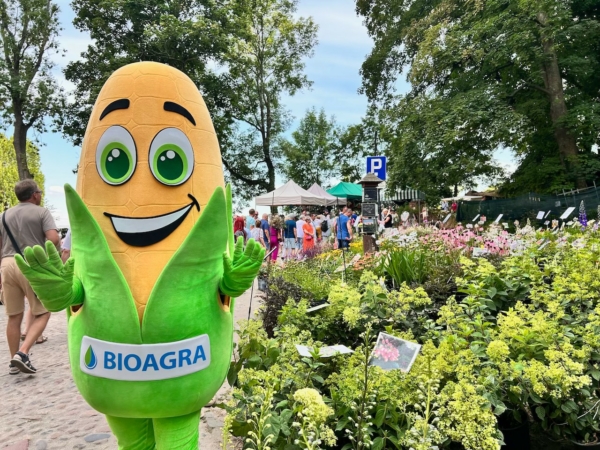
Bioagra supported Flower Summer for yet another year, with Mr. Corn standing out as one of the most visible side attractions throughout the event. He could be spotted during on-stage activities as well as strolling through the fragrant floral avenues. Bioagra’s mascot was a hit with the crowd—especially the youngest attendees—happily posing for hundreds of keepsake photos.
Inne aktualności
AKTUALNOŚCI | 24.12.2018
10 story Mr. Corn
Bioagra has launched probably the largest Christmas illumination in the region.
Aktualności
400 Queens from Bioagra
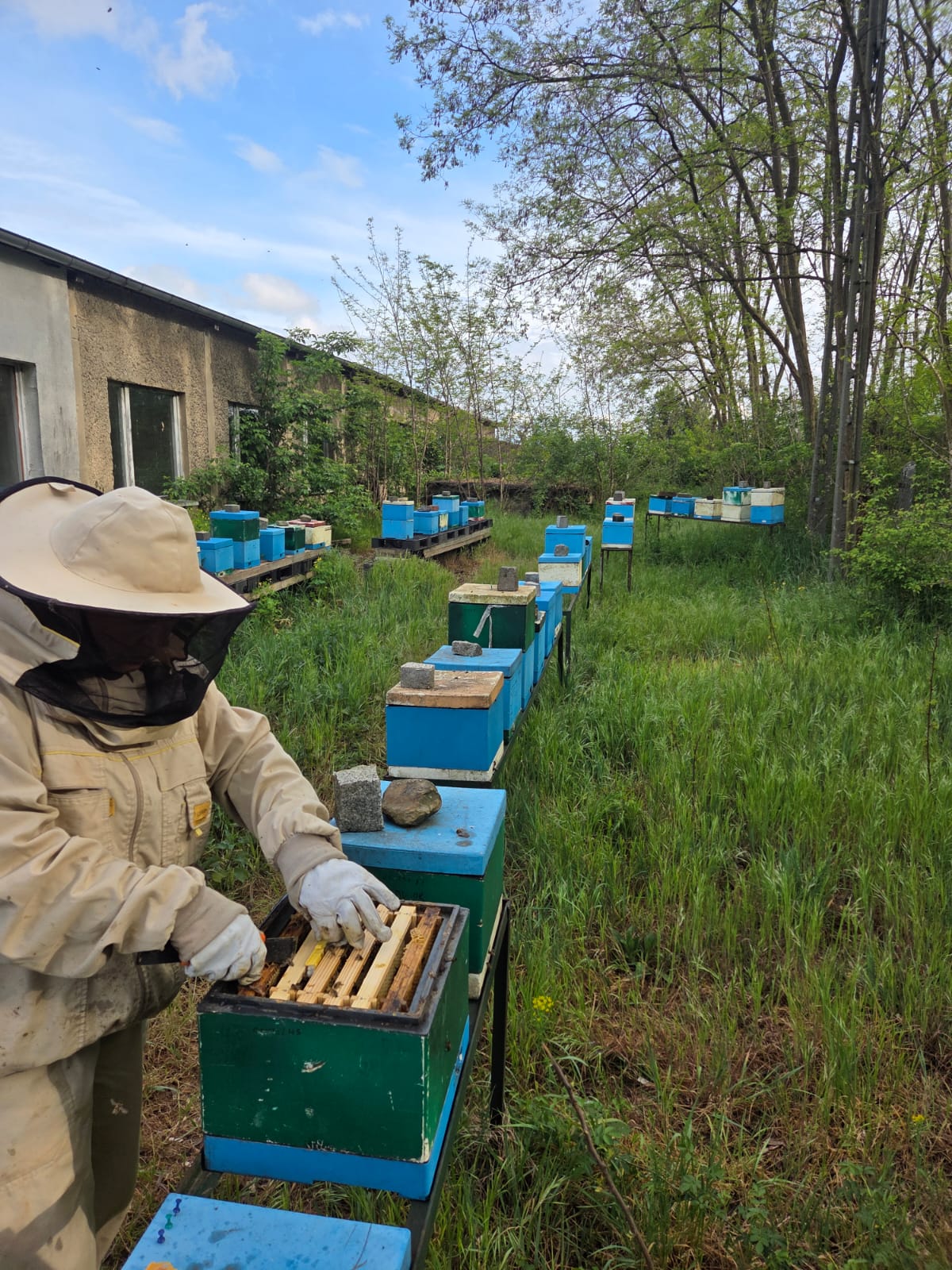
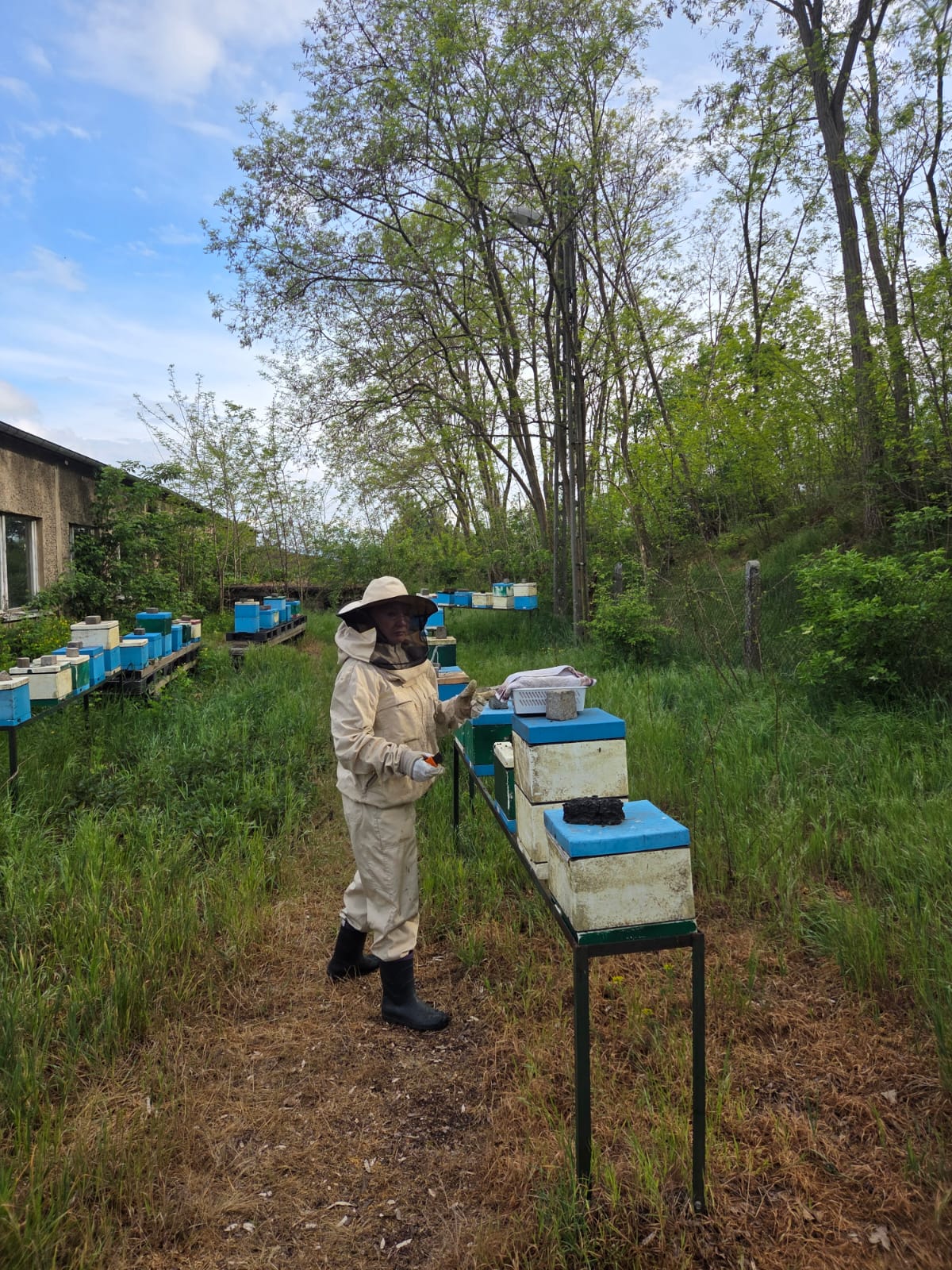
Local beekeeper Beata Malik, in cooperation with Bioagra, is running a unique queen bee breeding program. The project, conducted on a protected and monitored site near the “Goświnowice” Ethanol Production Plant, delivered an impressive result last year with several hundred queen bees raised.
Modern beekeeping faces many challenges, such as the loss of natural forage sources and a lack of insects adapted to specific regional conditions.
Queens Tailored to Local Conditions
“Breeding queen bees locally helps strengthen the local population because the queens are genetically matched to the conditions of the specific region, which directly affects their survival rate and productivity,” explains Beata Malik.
This allows beekeepers to avoid importing queens from distant regions, sparing the insects stress during transit—a factor that significantly weakens them.
Bees Feel Right at Home
Bioagra’s facility offers ideal conditions for queen bee rearing. On the designated site, the bees remain entirely undisturbed, with access to a diverse diet, supported by pollen-rich trees and shrubs planted around the area by the company.
The breeding program, running since 2018, has yielded excellent results. Through targeted genetic selection, the new queens lead calm and industrious bee colonies that are far less prone to swarming (when bees abandon their hives). Last year alone, 400 queen bees were successfully raised—averaging around 5 per mating nucleus.
“A young queen bee manages the colony much better,” says Beata Malik. “Ultimately, this increases hive productivity and boosts the colony’s chances of survival.”
The Issue of Declining Forage
One of the biggest issues facing bees is food scarcity caused by monoculture farming and the removal of nectar-rich trees like basswood (linden) and black locust (acacia). This forces beekeepers to feed their colonies artificially, especially after the rapeseed harvest.
This makes initiatives by companies like Bioagra—which plant additional pollen-producing trees and shrubs on their premises—vital. Encouraging the planting of nectar and pollen-rich flowers to provide these insects with essential energy is equally crucial.
While bees did not experience the effects of the pandemic like humans did, they react severely to climate fluctuations, which limit their access to natural food sources.
Want to Help the Bees?
Anyone can contribute to improving conditions for pollinators by building a rich food source nearby and prioritizing insect safety.
May is the ideal time to sow annual plants that quickly create an abundant “bee cafe.” Here are examples of bee-friendly plants to sow in your garden or local space:
-
Lacy Phacelia: The undisputed queen of yield; grows exceptionally fast.
-
Sunflowers, Calendula, and Marigolds: Extremely resilient, they brighten up gardens and bloom straight into autumn.
-
Cornflowers and Poppies: Great for creating a wild, natural flower meadow.
-
Trees (Linden and Acacia), Herbs (Lavender, Common Sage, Thyme, Lemon Balm, and Mint), and Shrubs (Raspberry, Blackberry, Alder Buckthorn, and Dog Rose): Follow the lead of the pros by planting perennial pollen sources nearby.
Golden Rules of Caring for Bees
-
Maintain Continuity (The Food Conveyor Belt): Select plants so they bloom sequentially all the way into October, preventing starvation periods in the hive.
-
Diversity Equals Health: Different flower shapes attract a variety of pollinators (honeybees and wild bees alike), and a varied pollen diet delivers complete nutrition.
-
Safe Spraying: Never spray plants during the day when insects are active. Spraying should ideally be done after 8:00 PM when bees have stopped flying for the day.
Supporting the local ecosystem by planting nectar- and pollen-rich vegetation is the simplest way to make a real difference in helping bee colonies survive challenging environmental conditions and climate fluctuations.
Inne aktualności
AKTUALNOŚCI | 24.12.2018
10 story Mr. Corn
Bioagra has launched probably the largest Christmas illumination in the region.
Aktualności
They Swam All the Way to Budapest. Nysa’s Otyliada 2026
While most residents of Nysa were fast asleep, a true battle against exhaustion was just getting underway at the indoor swimming pool. Otyliada 2026 proved that the limits of endurance lie far beyond what reason suggests — and Nysa’s swimmers delivered a surprising performance.
Logistical support for the Nysa Otyliada was provided by Bioagra, which supplied not the typical sweets and sugary bars, but supplementation kits including energy gels, amino acids, isotonic drinks, and vitamin bars, as well as recovery snacks: ham and cheese rolls, bananas, chocolate, and isotonic beverages. This kind of kit helps maintain stable performance over long hours of competition. The event was organized by the Nysa Development Agency, which manages the indoor swimming pool.
Nysa’s List of the Persistent
At 6:00 PM on Saturday, across more than sixty pools throughout Poland, over 2,600 competitors started simultaneously. In Nysa, 26 participants entered the water. The record result from 2025 (31.5 km) was not beaten. This year’s field was, however, exceptionally strong and closely matched, and the total distance covered by all participants reached 365 km — the distance you’d need to travel to get from Nysa all the way to… Budapest, the capital of Hungary.
In 2025, only two women made it into the top ten. This year saw a marked improvement among female competitors — five of them placed in the TOP 10, reflecting the growing popularity of the swimming marathon among women.

Motivation Matters
Participants explain that Otyliada is for everyone. “There’s no pressure — you can get in the water and get out whenever you want. It’s about challenging your own abilities and limits.”
A surprising example of motivation came from the youngest competitor. Marta, just under 11.5 years old, covered an impressive six kilometers — one kilometer for each member of her family. “The first kilometer was for my mom, the second for my dad, the third and fourth for my brothers, the fifth for me, and the last one for our dog Rico,” she explained.
For those who swam the furthest, “the water didn’t interfere with swimming at all — it was as if it offered no resistance,” one participant recounted. “They made minimal movements yet maintained an incredible pace. Training and natural ability really pay off.”
17 Kilometers More Than the Year Before
A year-on-year analysis of results reveals just how powerful consistent work can be. The most spectacular example of progress in the Nysa edition was Bartłomiej’s result: in 2025 he swam 10 km, finishing in 14th place. In just one year, the same swimmer improved his result by nearly 17 kilometers, achieving 26.70 km in 2026 and earning second place on the podium.
What do you do when the inevitable crisis hits? For one participant, magnesium supplementation is essential — without it, muscle cramps can quickly end your race. “When my muscles seize up, I save myself by switching stroke. I move from freestyle, which I consider the best stroke for long distances, to the calmer breaststroke. That allows my muscles to relax and recover.”


List of Otyliada 2026 Participants in Nysa
-
- Marta Rother: 27,30 km
- Bartłomiej Juraszek: 26,70 km
- Michał Sperczyński: 25,05 km
- Katarzyna Hewczuk: 24,80 km
- Bogusław Ogrodnik: 22,60 km
- Małgorzata Górska: 21,45 km
- Patrycja Kasprzak: 21,00 km
- Michał Dziedzic: 20,15 km
- Jan Szczepaniak: 17,60 km
- Maja Kułak: 15,20 km
- Brajan Bachniak: 14,10 km
- Maciej Majchrzak: 14,00 km
- Aleksander Gruca: 12,00 km
- Patryk Zwardoń: 12,00 km
- Oskar Buczkowski: 12,00 km
- Kacper Michalski: 10,88 km
- Magdalena Sobkowicz: 10,30 km
- Tomasz Jarząbek: 10,00 km
- Marysia Jamróz: 8,05 km
- Olena Tkachenko: 7,55 km
- Mateusz Sypek: 7,25 km
- Marta Kaniewska: 6,05 km
- Jakub Hutek: 6,00 km
- Łukasz Kaniewski: 5,53 km
- Tomasz Biliński: 4,05 km
- Katarzyna Jedynak: 3,40 km.
This year’s edition of Otyliada brought together a total of 2,660 competitors, who collectively covered an impressive distance of 22,225 km — more than half the circumference of the Earth. The event bridged generations, with the youngest participant being just one year old and the oldest 86.
Despite fierce competition, the Otyliada record was once again left unbroken. It has belonged for nearly a decade to Sebastian Karaś, a professional swimmer who covered an extraordinary 54.2 km. Karaś has won 50 medals at the Polish Championships across all age categories and has set 5 national records in the pool. This year, the best result in Poland was achieved by Aleksander Janczylik in Słupsk, reaching 44.9 km.
Inne aktualności
AKTUALNOŚCI | 24.12.2018
10 story Mr. Corn
Bioagra has launched probably the largest Christmas illumination in the region.